

The assumption that voice acting requires a broadcast-quality voice is probably the single biggest reason people never start. Voices.com — one of the largest voice acting marketplaces with over 2 million registered clients — regularly books talent for corporate narration, e-learning content, explainer videos, and audiobooks who sound like normal, articulate people. Not radio announcers. Not movie trailers. The Voices.com platform connects businesses with voices that match their brand, and most brands don’t want dramatic. They want clear, relatable, and consistent.
What New Voice Actors Get Wrong From Day One
Most beginners focus entirely on their voice and almost nothing on their positioning. They record a generic demo, upload it, and wait. That approach fails not because the voice is wrong, but because the profile doesn’t communicate anything specific to a client scanning 50 options in five minutes.
Voices.com operates on an audition and direct invitation model. Clients post jobs, voice actors submit custom auditions, and the client selects based on fit — not just vocal quality. What separates booked voice actors from inactive ones isn’t usually talent. It’s profile clarity, niche positioning, and audition response time. These are learnable, operational advantages that have nothing to do with the sound of your voice.
How to Get Booked on Voices.com: What Actually Moves the Needle
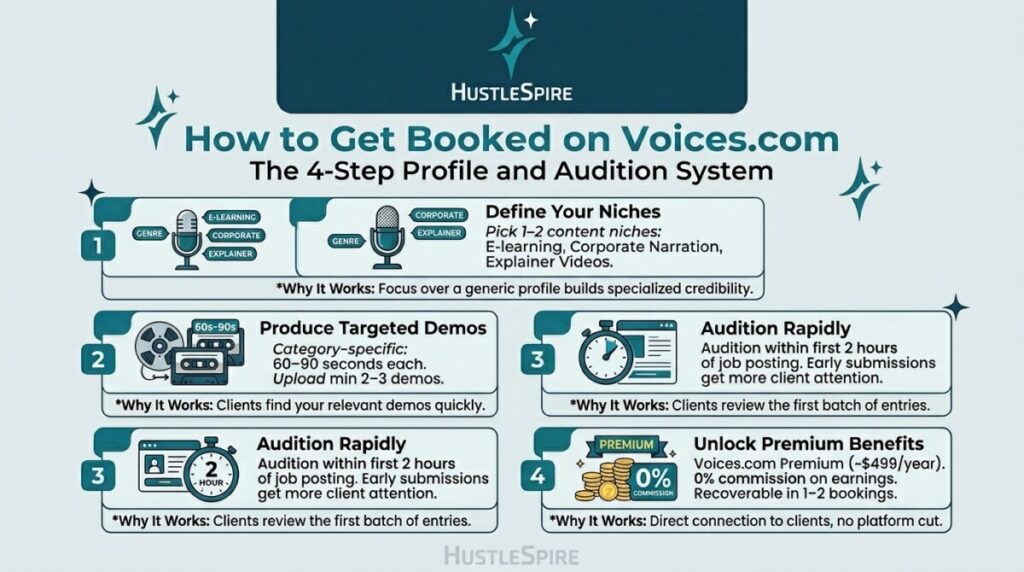
Step 1: Pick one or two content niches and build your profile around them.
E-learning narration, corporate training videos, real estate walkthroughs, health and wellness content — these categories generate consistent, repeat client demand on Voices.com. Profiles that specialize attract clients faster than generalist profiles because clients searching for “e-learning narrator” want to see that specific experience front and center. A profile that says “warm, clear voice for corporate training and e-learning” converts better than “versatile voice actor for any project.” Specificity signals expertise, even if you’re just starting out.
Step 2: Your demo is your application — treat it like one.
Voices.com allows you to upload multiple demos by category. A 60-90 second e-learning demo, a separate corporate narration demo, and an explainer video demo cover the three highest-volume job categories on the platform. You don’t need a professional recording studio to start. A quiet room, a Blue Yeti or Audio-Technica AT2020 microphone (both in the $100-$130 range), and free software like Audacity produce demo quality that competes at the entry level. The demo that books work is clean, dry, and shows the client exactly what they’d be buying.

Step 3: Audition within the first two hours of a job posting.
Voices.com data and patterns among active talent consistently point to one variable: early auditions get more client attention than later ones. When a client opens submissions and your audition is near the top, you’re more likely to receive a full listen. Set up Voices.com job alert notifications and treat the first two hours after a relevant job posts as your priority window. This habit alone significantly changes booking rates for active voice actors on the platform.
Step 4: Understand the platform’s fee structure before you price.
Voices.com charges a membership fee — the Premium plan runs approximately $499/year — which gives you access to unlimited auditions and direct job invitations. That upfront cost surprises many newcomers. However, unlike Fiverr or Upwork, Voices.com doesn’t take a percentage commission from your earnings. What you quote is what you keep. Entry-level e-learning and corporate narration rates typically range from $200-$500 per finished hour of audio, making the annual membership recoverable within one or two bookings for most active members.
Many people assume voice acting is the only quiet digital income stream, but the truth is there are others hiding in plain sight. For example, The Side Hustle Everyone Scrolls Past: How Community Managers Quietly Make $10K+ Monthly shows how people are building serious income simply by managing online communities.
What Slows People Down
Most new Voices.com members don’t book their first job in week one. A realistic timeline for a focused new member — with a clean demo, niche-specific profile, and consistent auditioning — is 4-8 weeks before the first booking. Reaching $1,000/month requires building a track record of completed jobs and client reviews, which typically takes 3-6 months of active participation. The platform also has significant competition in popular niches. Additionally, be aware that the $499/year membership is a real financial commitment — it only makes sense if you’re prepared to audition consistently, not occasionally.
Go to Voices.com and browse the open job listings under the e-learning or corporate narration categories — no account required to view them. Read five job descriptions and notice the language clients use to describe what they want. Then record a 60-second read of any corporate or educational script you find online and listen back critically for clarity and pacing. That self-assessment, before you spend a dollar, tells you more about your starting point than any article can.

What really separates people who land consistent voice work from those who never get traction often comes down to thinking differently about opportunities. That same principle is explained in The Hustle Mindset: What Separates $1K Earners From $10K Earners, where the focus is on how small mindset shifts change income ceilings.
