
The barrier to app creation has completely collapsed. You no longer need a computer science degree, a development team, or even basic coding skills to build and sell apps without coding in 2026.
What used to require months of learning programming languages now takes hours with the right no-code tools. And the best part? People are actually making money from this—not just building apps for fun, but selling them, licensing them, and creating real income streams.
If you’ve ever had an app idea but thought it was out of reach, this is your moment. Let’s walk through exactly how this works and why now is the time to start.
The No-Code Revolution Is Real
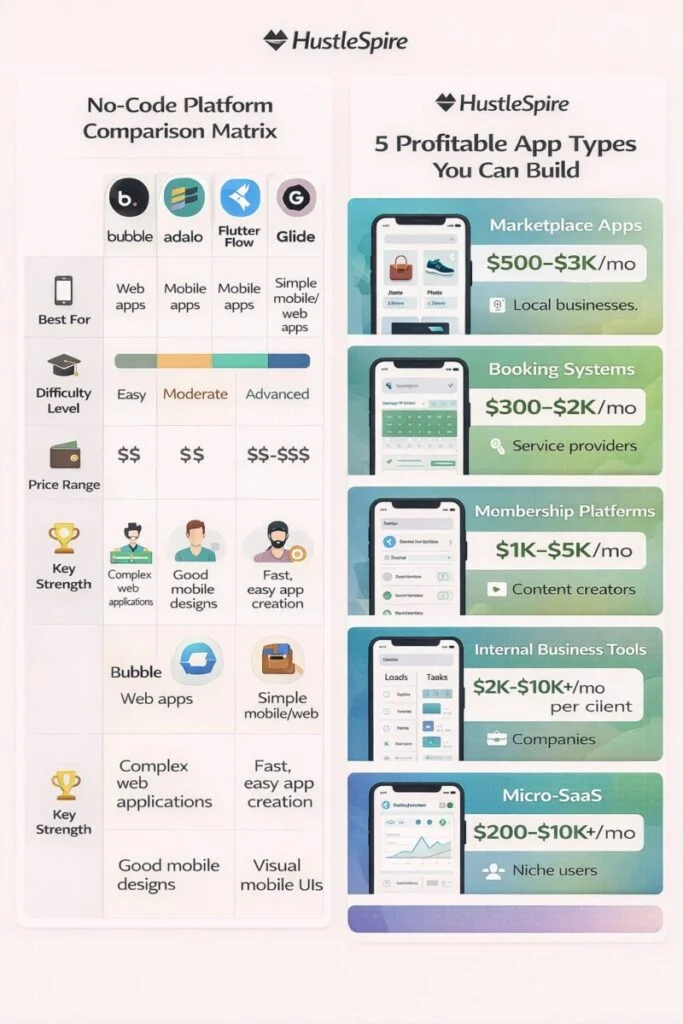
No-code platforms have evolved from simple website builders to full app development environments. Tools like Bubble, Adalo, FlutterFlow, and Glide let you build functional, professional apps using visual interfaces instead of writing code.
You drag and drop elements, connect databases, set up user authentication, and design workflows—all without touching a single line of code. The learning curve still exists, but it’s measured in weeks, not years.
These platforms aren’t toys. Companies are building million-dollar businesses on no-code infrastructure. Startups are launching MVPs in days instead of months. Freelancers are charging $5,000 to $15,000 per app build.
What You Can Actually Build
When people hear “no-code apps,” they often picture basic to-do lists or simple calculators. That’s outdated thinking.
You can build marketplace apps, booking systems, membership platforms, content delivery apps, community hubs, SaaS tools, and internal business applications. If you can map out the user flow and logic, you can build it.
Examples of real apps built with no-code tools include fitness tracking apps, local service marketplaces, event management platforms, and niche social networks. The limitation isn’t the tools—it’s your ability to identify what people need and design a solution.
How to Actually Make Money
Building apps is one thing. Selling them is another. Here’s where most people get stuck—they build something cool but have no monetization plan.
Sell custom apps to businesses. Small businesses need apps for appointment booking, customer loyalty programs, internal workflows, and inventory management. They’ll pay well for custom solutions that solve real problems.
Build and flip apps. Create an app with a specific use case, get some initial users or prove the concept, then sell it on platforms like Flippa or directly to buyers. Think of it as digital real estate.
Launch a micro-SaaS. Build a simple software tool that solves one specific problem, charge a monthly subscription, and scale it. No-code makes this accessible to solo founders.
Offer app templates. Create pre-built app templates for common use cases (restaurant booking, gym management, etc.) and sell them to other no-code builders or businesses.
Freelance app development. Position yourself as a no-code app developer and take on client projects. You don’t need to call yourself a developer—call yourself an app builder or digital product creator.
The Skills You Actually Need
You don’t need to code, but you do need to think like a builder. Here’s what matters:
Problem identification. The best apps solve real problems. You need to understand your target user and what frustrates them.
User experience design. Your app needs to be intuitive. If people can’t figure out how to use it in 30 seconds, they’ll delete it.
Basic database logic. You’ll need to understand how data flows through your app—what gets stored, how it connects, and how users interact with it.
Project scoping. Start small. Build one core feature well before adding complexity. Most failed apps try to do too much at once.

Which Platform Should You Choose?
Each no-code platform has strengths. Bubble is powerful for web apps and complex logic. Adalo is beginner-friendly for mobile apps. FlutterFlow offers more design control. Glide is perfect for simple data-driven apps.
Start with one platform and learn it deeply before jumping around. The principles transfer, but scattered learning slows you down.
Most platforms offer free tiers or trials. Build a practice project first—something simple like a personal habit tracker or a directory app. Get comfortable with the interface before taking on client work or launching a product.
How to Find Your First Buyers
Building is half the equation. Distribution is the other half.
If you’re selling custom apps, start local. Reach out to small businesses in your area that could benefit from an app—gyms, salons, restaurants, real estate agents. Offer a pilot project at a reduced rate to build your portfolio.
If you’re launching your own app, validate the idea first. Talk to potential users. Build a simple landing page and collect emails before you build the full product.
For app flipping, focus on niches with clear demand. Research what’s selling on marketplaces, identify gaps, and build something better or more specific.
Let’s be honest: building apps with no-code tools is easier than traditional development, but it’s not effortless. You’ll still hit roadblocks. You’ll still need to learn. You’ll still need to iterate based on feedback.
The difference is that the barrier to entry is now low enough that you can actually start. You don’t need $50,000 to hire a dev team. You don’t need six months to learn to code. You need a problem to solve, a willingness to learn a platform, and the discipline to finish what you start.
And before committing to any app idea, it’s worth validating demand first. The no-code app walkthrough pairs well with the 7-day idea-testing framework, helping you confirm whether what you plan to build actually solves a problem people will pay for.
Your First Step
Pick one no-code platform. Sign up for the free version. Build one simple app this week—even if it’s just a personal project.
The goal isn’t perfection. It’s proof that you can do this. Once you’ve built one app, you’ll understand the process. Once you understand the process, you can start thinking about how to monetize it.
The opportunity to build and sell apps without coding is real. The tools exist. The market is there. The only question is whether you’re willing to start your hustle might just be the next viral app in 2026.
