

Most people frame this as a lifestyle choice. It isn’t. Freelancing and side hustles operate on completely different economic models — and picking the wrong one for your current situation doesn’t just slow you down, it locks you into a ceiling you won’t see until you’ve already hit it. One pays you faster. One scales further. Rarely does the same path do both.
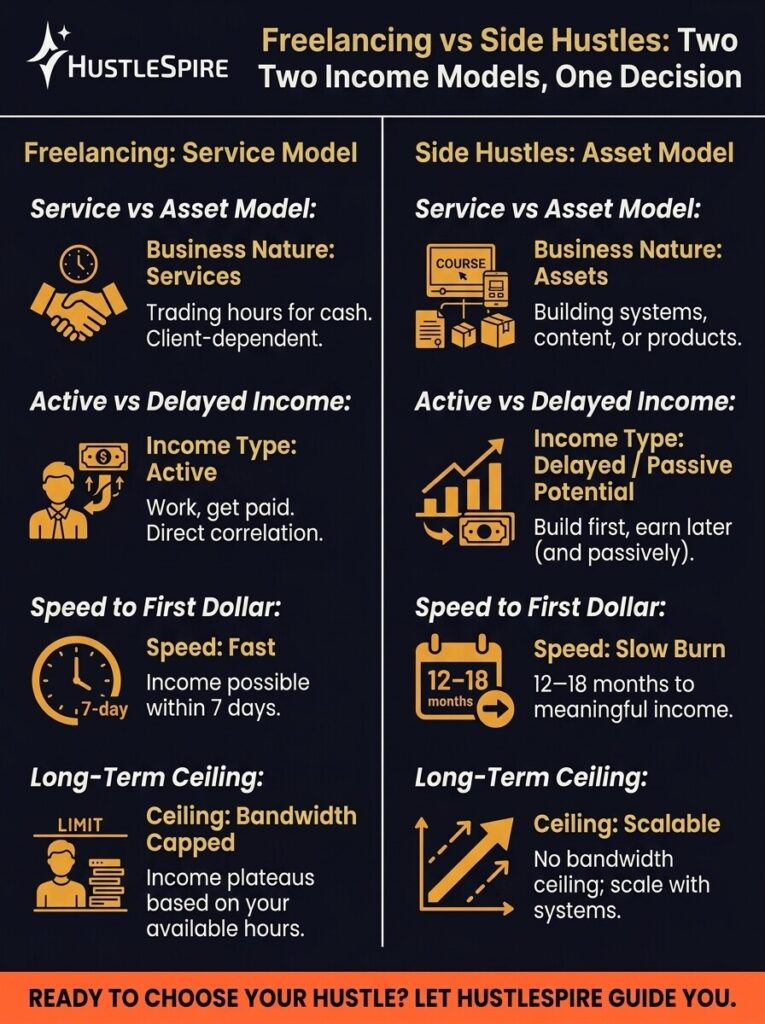
The mistake people make isn’t choosing one over the other — it’s choosing based on what sounds more entrepreneurial. Side hustle feels bolder. Freelancing feels safer. Neither instinct is useful. The real question is whether you need cash flow now or equity later, because those two goals demand different structures.
Someone chasing monthly survival income who launches a content-based side hustle will be broke and exhausted by month three. Someone with six months of runway who takes Fiverr gigs will still be trading hours for dollars in year two.
Freelancing vs Side Hustles: The Income Model Is Completely Different
Freelancing is a service business. You sell time and skill, priced per project or retainer. Income is predictable once you have clients, but it’s always tied to your bandwidth.
A copywriter billing $80/hour has a hard ceiling — there are only so many hours in a week, and every gap between clients is lost revenue. That’s not a flaw in the model; it’s the model. Freelancing scales through rate increases, specialisation, and eventually subcontracting—not through automation.
Side Hustles Scale Without You — But Only After You Build the Engine
A side hustle—a digital product, an affiliate content site, print-on-demand, or a newsletter—takes longer to generate income but doesn’t hit the same ceiling. The work you do in month one on a Redbubble store or an SEO-optimised blog post can still earn in month fourteen. That’s not passive income as Instagram describes it. It’s delayed income from upfront work. The distinction matters because most people quit before the engine starts.

Freelancing Pays You Faster — Sometimes Within the First Week
Speed to first dollar heavily favors freelancing. A skilled writer, designer, or developer can land a Fiverr or Upwork client within days of building a profile. That immediacy is real and underrated. If you need $500 this month, a side hustle won’t save you — but a freelance gig might.
The problem is that fast income creates a comfort trap. Freelancers who stop at “I’m booked out” never build beyond the job they created for themselves.
The Hybrid That Actually Works Is Sequenced, Not Simultaneous
Running both at the same time without a plan is how people burn out and underdeliver on both fronts. The sequence that works: freelance first to build cash flow and market knowledge, then use that stability to fund the slower build of a scalable side hustle.
A Fiverr freelancer who spends six months learning what clients actually need is better positioned to build a digital product or affiliate site than someone who launches cold with no audience and no insight.
A side hustle that scales takes 12 to 18 months of consistent output before the income becomes meaningful. Most people aren’t willing to say that out loud because it kills the pitch. Freelancing compounds faster in the short term but plateaus unless you deliberately break out of the service-provider identity. Neither path is easy. Both punish inconsistency.
The people who build real income through either model share one trait—they stayed long enough for the work to compound, not just long enough to feel productive.

Write down your current monthly income gap — the exact number you need to replace or supplement. If it’s under $2,000 and you need it within 60 days, open an Upwork or Fiverr account today and scope one service offer.
If you have six months or more of runway, map the side hustle model that fits your existing skills and start the SEO or distribution work this week—the path changes. The urgency doesn’t.
