

Here’s something most design platform comparisons skip over entirely: the majority of designers who enter contests on crowdsourcing platforms walk away with nothing. On 99designs and DesignCrowd combined, estimates suggest only 1 in 10 to 1 in 15 contest entries ever wins. That’s not a reason to avoid these platforms — it’s a reason to approach them with a strategy instead of blind optimism. Knowing how 99designs vs. DesignCrowd actually pays designers changes everything about how you use them.
What New Designers Get Wrong About These Platforms
Most designers sign up, enter a few contests, lose, and conclude the platforms don’t work. The real problem is almost always positioning. Both platforms have a tiered system that rewards designers with track records — but you need to build that track record first, and the path to doing that differs significantly between the two.
99designs operates on a level system (Entry, Mid, Top, Elite) that gates you from higher-paying contests until you’ve proven yourself at lower tiers. DesignCrowd runs a simpler star-rating system influenced by contest wins and client feedback. Neither platform hands you $500 projects on day one. The designers earning consistently treat these platforms as a medium-term investment, not an immediate income source.
99designs vs. DesignCrowd: Where the Real Earning Differences Live
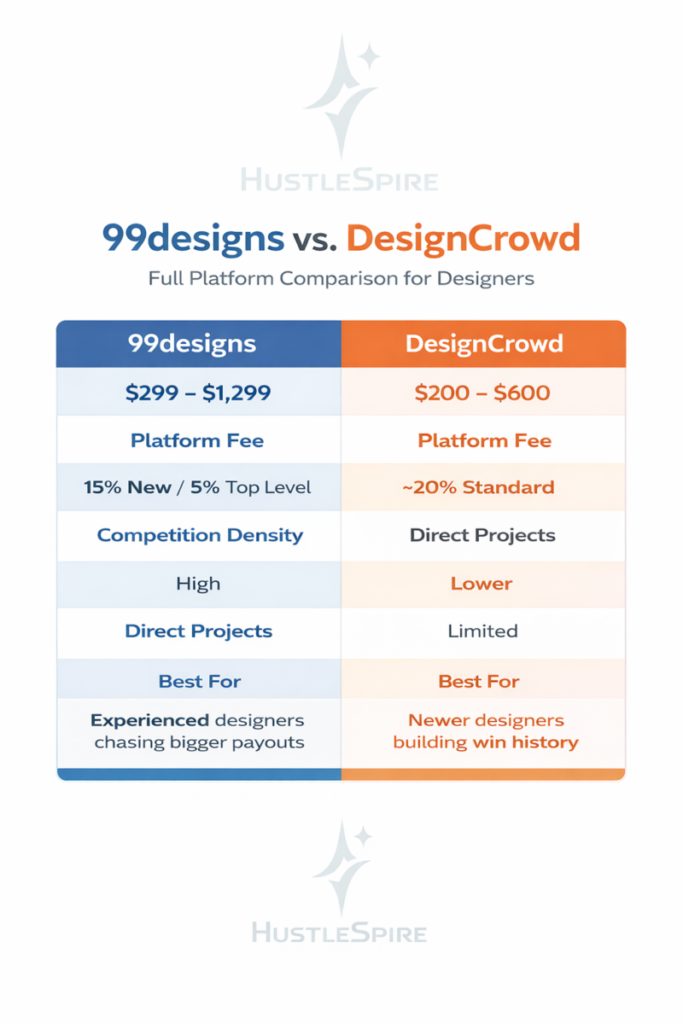
99designs pays more per win — but competition is steeper.
Contest prize money on 99designs ranges from around $299 for a Bronze logo contest to $1,299 for a Platinum tier project. However, 99designs also takes a platform fee from winnings — roughly 15% for newer designers, dropping to around 5% for Top-level designers. The fee structure incentivizes you to level up fast. Designers who focus on a specific niche — restaurant branding, SaaS UI, real estate logos — tend to level up faster because their portfolio signals expertise rather than generalism.

Additionally, 99designs offers a direct projects feature where clients bypass contests entirely and hire a specific designer. This is where established designers on the platform report their most consistent income, often earning $500-$2,000 per project. Getting there requires winning contests first to build your profile rating.
Some others skip contests entirely and turn their designs into passive income streams through print-on-demand platforms. In fact, Why Redbubble Sellers Are Quietly Making $3K/Month While You Sleep breaks down how some creators are doing exactly that.
DesignCrowd has lower prizes but lower competition density.
Average DesignCrowd contest prizes run $200-$600, lower than 99designs at comparable tiers. However, the designer pool per contest is notably smaller, which improves your odds of winning. For designers just starting out, DesignCrowd’s lower barrier to entry makes it a practical place to build a win history before transitioning to 99designs’ higher-value contests. Some designers use both simultaneously — DesignCrowd to build confidence and early wins, 99designs to chase larger payouts once their portfolio has substance.
Where both platforms fall short — and what to do about it.
Neither platform is a sustainable solo income source for most designers. The spec work model (designing before you’re paid) is inherently inefficient. A realistic strategy treats contest wins as portfolio builders and reputation accelerators, then uses that credibility to land direct clients on Fiverr or Toptal, where you negotiate rates rather than compete for prize pools.
Income Expectations
Designers who enter 5-7 well-researched contests per month on either platform typically see their first win within 6-10 weeks, assuming they study winning entries in their niche before submitting. Monthly earnings from contest wins alone rarely exceed $300-$600 for mid-level designers — not enough to replace income, but meaningful as a side stream. The more sustainable play is using platform wins to build a public portfolio, then converting that credibility into direct client work. If you’re relying purely on contest wins for income in 2026, you’ll stay stuck in the hamster wheel.

Go to 99designs and browse the open contests in one design category you’re already comfortable with. Study the top three entries in the last five closed contests in that category — note the style, color choices, and complexity level that won. Then enter one live contest this week using those observations as your brief. Treat the first three contests as paid research, not income attempts. The learning compounds faster than most people expect.
Of course, design contests aren’t the only way creatives are earning online. Many designers also sell templates, assets, and digital products directly — something explored in Sellfy vs. Gumroad vs. Stan Store: Which Platform Actually Pays You Faster?
