

Amazon Associates has been the default starting point for affiliate marketing beginners since 2006. But a quiet shift is happening in 2026 that most bloggers and content creators haven’t caught yet.
Benable, a social shopping recommendation platform, is pulling creators away from Amazon’s notoriously low commission structure and giving them something Associates never offered: a community-driven discovery engine that works without a blog, a website, or an existing audience. Here’s what’s actually changing and whether it matters for your income.
What Most Affiliate Marketers Get Wrong About Amazon Associates
Amazon Associates is comfortable. Everyone knows it, the product catalogue is infinite, and the trust factor with buyers is unmatched. Those are real advantages—but they paper over serious structural problems that quietly cap your earnings.
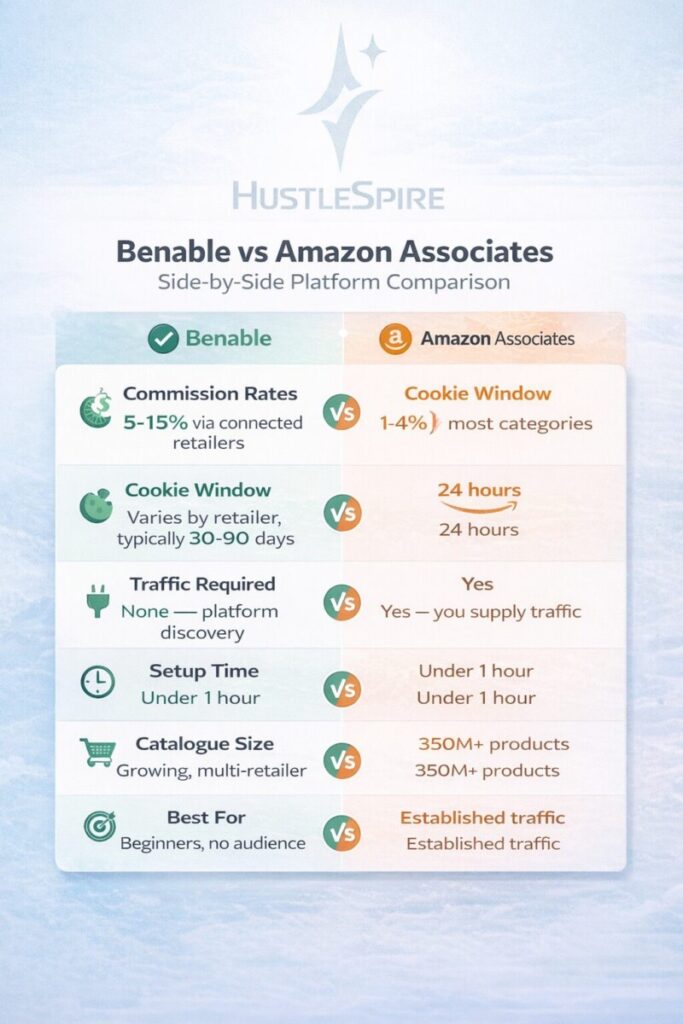
Amazon’s commission rates dropped dramatically in 2020 and never recovered. Most categories now pay 1-4%, meaning you need significant traffic volume before affiliate income becomes meaningful. A $50 product sale earns you $1-2. The 24-hour cookie window means any buyer who doesn’t purchase within a day of clicking your link earns you nothing—even if they come back and buy three days later. And Amazon can terminate your account or change commission rates with almost no notice, which has happened repeatedly.
The bigger problem is discoverability. Amazon Associates only works if you already have traffic. You need a blog, a YouTube channel, or a social audience sending people to your links. Without existing traffic infrastructure, Associates is essentially useless as a starting point.
How Benable Works as an Affiliate Platform Alternative
Benable operates differently from Amazon Associates at every level. Instead of links embedded in blog content, you build public recommendation lists around specific interests—think curated collections of products you actually use, organised by theme. Your Benable lists are discoverable within the platform’s own search and browse features, meaning you can build affiliate income from Benable’s existing user base without importing your own audience first.
The commission structure varies by retailer since Benable functions as an aggregator connecting creators with multiple affiliate programmes rather than paying a flat rate itself. This means your earnings depend on which retailers’ products you recommend—some paying 5-15%, significantly outperforming Amazon’s 1-4% in comparable categories. Products from retailers like Target, Walmart, and thousands of independent brands are available through Benable’s connected network.
One creator I’ve been tracking built a Benable list around minimalist home office setups in January 2026. Within eight weeks, her list had accumulated 340 saves from other Benable users and was generating $180-$220 monthly in affiliate commissions—without a single external traffic source driving people to it. She has no blog. Her Instagram has 400 followers. Associates would have paid her zero in the same timeframe.
The discovery advantage is the real differentiator. When someone on Benable searches “home office under $500,” your curated list surfaces in results. That’s inbound traffic you didn’t have to build—fundamentally different from Associates’ model where you create traffic and then monetise it.
If you’re just getting started, Affiliate Marketing in 2026: How Beginners Can Still Win explains the fundamentals before choosing between Benable and Amazon

When Amazon Associates Still Wins
Benable isn’t a replacement for Associates in every situation. If you already have significant blog traffic, Associates’ infinite product catalogue and buyer trust still convert at high rates—especially for high-ticket purchases where buyers feel more comfortable with Amazon’s return policy and Prime shipping.
Associates also wins for niche products where Benable’s retailer network hasn’t penetrated deeply. Highly specialised equipment, certain technical products, or very new releases often aren’t available through Benable’s connected retailers, forcing creators back to Amazon regardless of the commission difference.
The most practical approach in 2026 is running both simultaneously. Use Associates for high-ticket or specialised products embedded in existing content. Use Benable for curated lifestyle and evergreen product categories where its discovery engine provides genuine organic reach you haven’t earned elsewhere yet.
Additionally, Benable is still a growing platform. Its user base is expanding but isn’t anywhere near Amazon’s buyer volume. The discovery engine works, but the pool of users discovering your lists is smaller than the pool of people landing on your blog via Google. Early adoption advantage is real—but it’s an early adoption advantage, not a proven mature platform.

Build One Benable List
Create a free Benable account and build one curated list in a niche you genuinely know—home office gear, skincare routines, budget cooking equipment, productivity tools. Add 8-12 products you actually use or have researched thoroughly, write honest one-sentence notes on each, and optimise your list title for how someone would search for it.
Don’t abandon your Amazon Associates links while you’re doing this. Run both, track earnings separately over 60 days, and let the data tell you where your effort belongs. That’s a smarter use of 90 minutes this week than debating which platform is theoretically better.
If you’re still shaping your overall strategy, Your First Online Hustle: The Method That Actually Works in 2026 (Not What You Think) helps you build the right foundation before committing to any affiliate platform.
