

Here’s something that’ll reframe your whole approach to selling Etsy printables: the top-selling printable shops aren’t run by graphic designers. They’re run by people who figured out what buyers are already searching for, then built simple, useful products around that demand. Design skill ranks third or fourth on the list of things that actually matter here. Research and volume matter far more.
Most people stumble into this side hustle backwards — they make something they think looks good, list it, then wonder why nobody buys it. The Etsy algorithm doesn’t reward pretty. It rewards relevance, reviews, and consistency.
What Kills Most New Printable Shops Before They Ever Make $100
The biggest mistake new sellers make is treating Etsy printables like an art project instead of a product business. They spend three hours perfecting the font on a wall print nobody searched for, instead of spending 30 minutes making a functional budget tracker 4,000 people search for every month.
One seller I know launched 47 listings in her first two months — all personal passion projects with no keyword research. She made six sales. She restarted with demand-first thinking, launched 20 targeted products in month three, and crossed $800 that month. Same platform, completely different approach.
The product isn’t the hard part. The positioning is.
If you’re starting with more ambition than budget, you’ll also want to read Broke But Ambitious? Here’s What Print-on-Demand Really Looks Like in 2026 — it gives you a clear picture of what to expect before you dive into digital or physical products.
How to Start Selling Etsy Printables With No Design Background
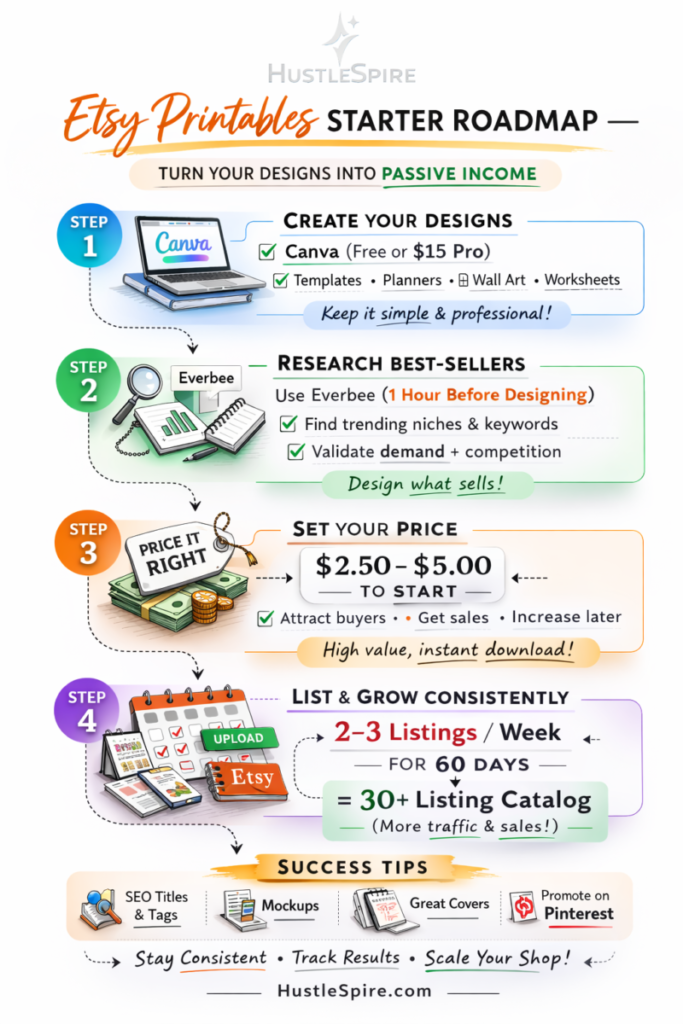
Step 1: Use Canva to build products, not art.
Canva’s free plan gives you access to hundreds of templates specifically built for printable formats — A4, US Letter, 8×10, and more. You’re not designing from scratch. You’re editing: swapping colors, replacing placeholder text, adjusting fonts. A wedding budget tracker, a weekly meal planner, a habit tracker — these are all template-level products. Canva Pro (roughly $15/month) adds brand kits and the ability to resize in one click, which matters when you’re producing volume.
Step 2: Do keyword research before you open Canva.
Type a broad term into Etsy’s search bar — “planner printable,” “budget template,” “kids chore chart” — and watch the autocomplete suggestions. Those suggestions are real search queries from real buyers. Each one is a product idea. Additionally, tools like Everbee (free tier available) show you estimated monthly search volume and revenue data for existing listings. Spend one hour on research before you make a single product. This step alone separates the shops that make $50/month from the ones making $500.

Step 3: Price between $2.50 and $5.00 to start.
This isn’t about undervaluing your work — it’s about removing purchase friction while you build reviews. A buyer will impulse-buy a $3 printable without a second thought. That same buyer will hesitate at $9 from a shop with no reviews. Once you have 10-15 reviews on a listing, test raising the price. Many established printable sellers operate at $4-$8 per product and still generate solid passive income at scale because the files deliver themselves automatically through Etsy’s digital delivery system.
Step 4: List consistently, not perfectly.
Etsy rewards active shops. Aim for 2-3 new listings per week for your first 60 days. Thirty listings gives the algorithm enough data to start surfacing your products in relevant searches. Each listing also functions as its own SEO entry point — more listings means more chances to be found.
What the Timeline Actually Looks Like
Don’t expect to replace your income in month one. Realistically, most focused sellers hit their first $100 somewhere between weeks 6-10, assuming consistent listing and basic keyword research. Reaching $500/month typically takes 3-5 months and a catalog of 40-80 products. Etsy also charges a $0.20 listing fee per product and takes a 6.5% transaction fee on each sale — factor that into your pricing from day one. The passive income angle is real, but it takes active upfront work to build the catalog that earns while you sleep.

Open a free Canva account and a free Everbee account today — both take under five minutes. Search one niche on Etsy that you actually use yourself (fitness, budgeting, meal planning, parenting), identify the top three autocomplete suggestions, and make your first product this week. One listing is all you need to start learning how the platform responds to your work.
If you’re serious about turning simple printables into real income, the next smart question becomes: where should you actually sell them? I broke that down in Sellfy vs. Gumroad vs. Stan Store: Which Platform Actually Pays You Faster? so you can choose a platform that won’t delay your cash flow.
