

Fiverr’s AI Brief tool changed how buyers hire in 2026 — and most sellers are still responding to it like it’s a job board. It isn’t. The Brief system uses AI to match buyer intent with seller gigs automatically.
That means your gig metadata, your response quality, and your pitch structure now determine whether you even appear in a buyer’s matched results. Sellers who haven’t adjusted their approach are competing for scraps that the algorithm already sorted against them.
Most sellers treat Fiverr Briefs like a faster version of Buyer Requests — read the job, paste a template, and hope for a reply. That assumption is expensive. The AI Brief tool doesn’t just list jobs. It pre-scores seller matches based on gig relevance signals before the buyer even sees responses.
A templated pitch sent to a Brief you were never matched to is an invisible effort. Sellers lose not because their pitch is weak, but because their gig wasn’t positioned to get matched in the first place.
How the Fiverr AI Brief Tool Actually Matches Sellers to Buyers
The match isn’t random, and it isn’t purely based on seller level. Fiverr’s AI reads the buyer’s brief — their described need, budget range, and timeline — and cross-references it against active gig metadata. That means your gig title, tags, and description are doing the matching work before you write a single word of response.
If your gig title says “I will write content for businesses” and a buyer submits a Brief for “weekly newsletter copy for a health and wellness brand,” the algorithm sees a weak relevance signal. You may not surface at all. Specificity in your gig metadata isn’t just good SEO—it’s the entry condition for Brief matching.
Why Your Gig Tags Determine Whether the Fiverr AI Brief Tool Finds You
Most sellers fill their tags with broad terms they think sound impressive. “Copywriting.” “Content creation.” “Writing.” Those terms match everything and nothing. The Brief tool favours gigs with tags that mirror actual buyer language—the phrases buyers type when they describe their problem, not the phrases sellers use when they describe their service.
Audit your tags against your last five Brief prompts you received or found. If the language doesn’t overlap significantly, your tags are working against your match rate. Replace one broad tag with a specific buyer-intent phrase and monitor Brief volume over the following week. The feedback loop is faster than most sellers expect.
Crafting a Brief Response That Converts: Structure Over Enthusiasm
Getting matched is step one. Converting the match is step two — and this is where sellers who understand how to use the Fiverr AI Brief tool pull ahead of everyone else.

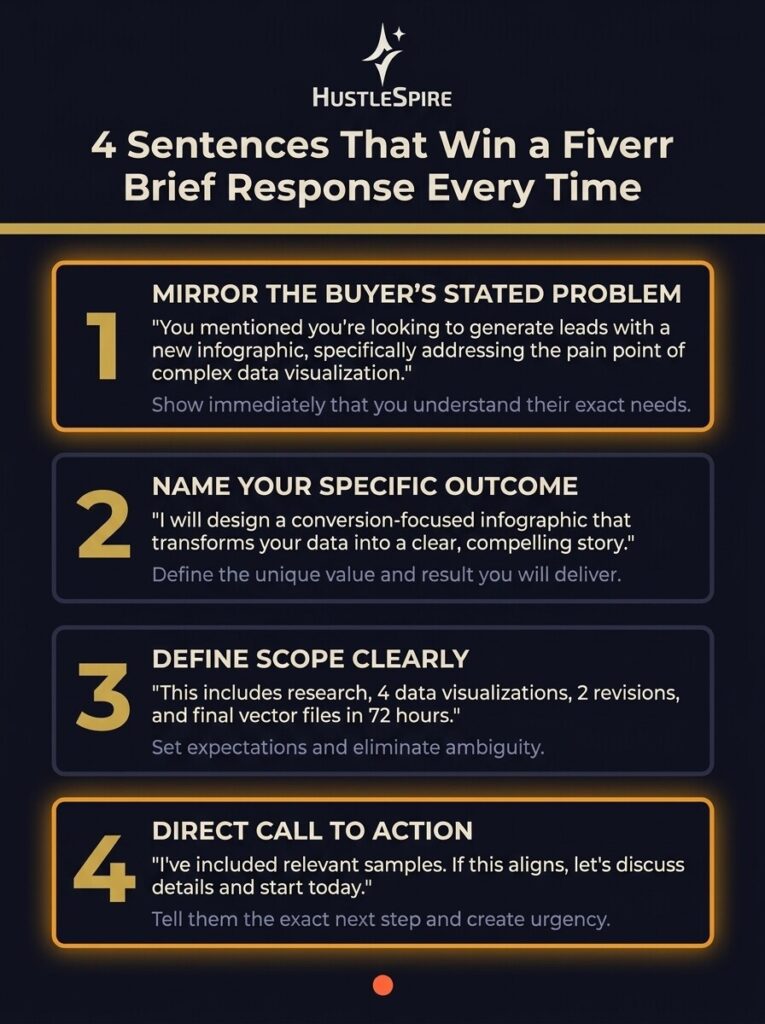
A converting Brief response follows a precise structure: one sentence that mirrors the buyer’s stated problem, one sentence that names your specific outcome, one sentence that defines the scope clearly, and a direct call to action. Four sentences total. Buyers reviewing matched responses are scanning — not reading. The response that gets read fully is the one that earns the order. Long pitches signal insecurity. Tight ones signal competence.
Advanced Brief Strategy: Using Response Data to Refine Your Gig Positioning
Every Brief you respond to is market research. Track which Brief categories you get matched to most often, which response structures generate replies, and which gig descriptions were active when your match rate was highest. That data tells you more about your actual market position than any keyword tool.
Sellers who treat Brief responses as a feedback loop—adjusting gig tags, titles, and descriptions based on match and conversion patterns—consistently outperform sellers who treat each Brief as an isolated opportunity.

The Fiverr AI Brief tool rewards sellers who have already done the positioning work. If your gig metadata is vague, your match rate will reflect it — and no amount of pitch quality fixes a poor match. Expect two to three weeks of deliberate tag and title testing before your Brief match volume improves meaningfully. That’s not a long time. It feels long when you’re watching zero matches roll in. Stay in the data, not the frustration.
Open your active Fiverr gig today and read every tag you’ve set. Then open the last three Briefs in your category and read how buyers describe what they need. Write down the exact phrases they use. Replace your two broadest tags with two phrases pulled directly from that buyer language—then give it seven days.
The full system for Brief optimisation — alongside the rest of the Fiverr seller strategy stack—is covered in the Fiverr MasterClass linked below, built for both new and experienced sellers. [Get access here]
Disclosure: This post contains affiliate links. HustleSpire earns a small commission if you purchase through them, at no extra cost to you. We only link to what we’d recommend directly.
